

Description
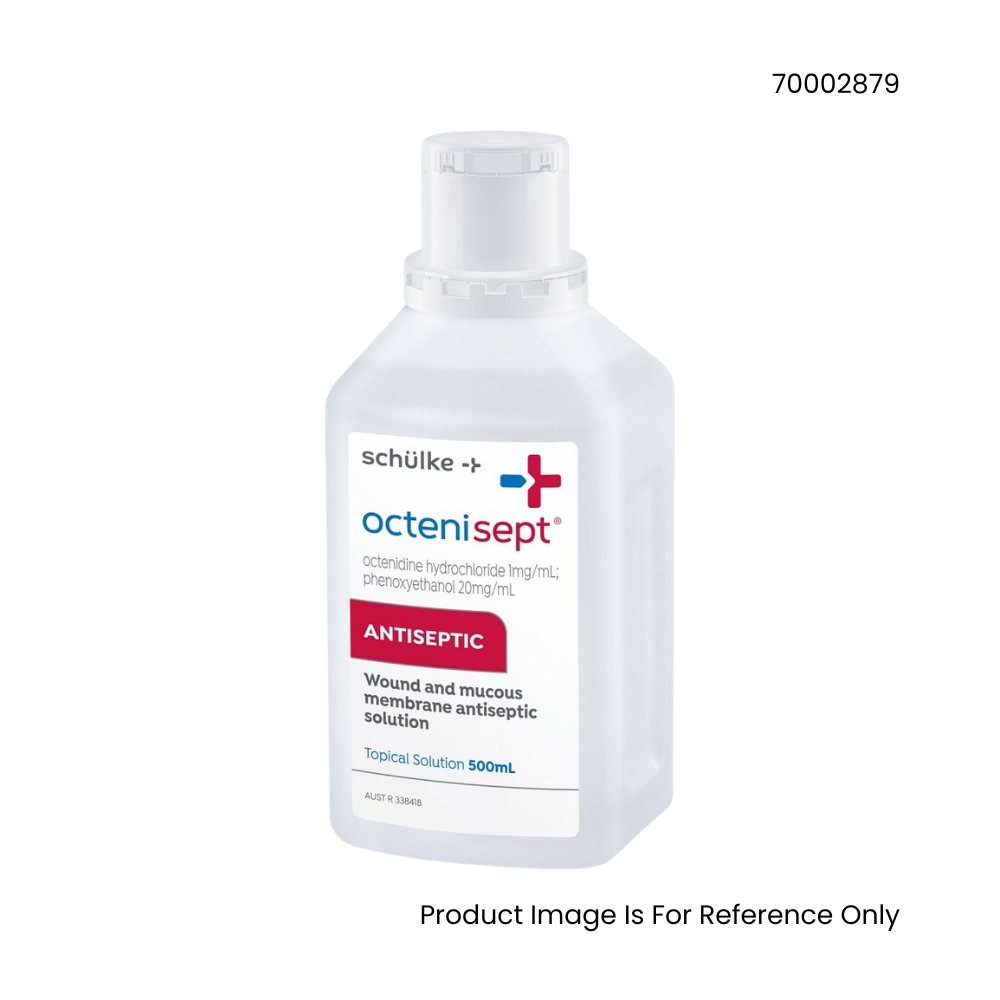
Aqueous wound and mucous membrane antiseptic.
Octenisept Antiseptic Bottle Features:
- Broad spectrum of antiseptic efficacy.
- ?Fast onset of action (1 min.) and long-term effect (24 h remanence).
- Very good skin and mucous membrane tolerance.
- Suitable for infants and premature babies.
- Safe use during pregnancy.
- Painless treatment.
- Colourless.
Application methods / indications:
- Moisturize the treated area evenly and thoroughly with the antiseptic.
- Swab method: Rub concerned areas with saturated swabs. Swabbing is the prefered method of application.
- Spray method: In individual cases spray octenisept directly on accessible areas of the skin and mucous membrane. Make sure all areas are evenly moistened.
- Rinsing: octenisept may also be used for oral cavity, vagina and wounds.
Octenisept Antiseptic Bottle Indication Areas:
Wound treatment: Antiseptic treatment of traumatic, acute, chronic, surgical and burn wounds.
Mucous membrane antisepsis:
- Prior to diagnostic and surgical interventions in the anogenital (e.g. before obliteration of haemorrhoids) and the urogenital area (e. g. before placing an intra-uterine device (IUD), before prenatal, intranatal and postnatal manipulations).
- Prior to diagnostic and surgical interventions in the oral cavity (e.g. before tooth extractions).
- Before placing urinary tract catheters.
- For preoperative skin antisepsis in the area close to mucous membranes (e.g. before section).
Microbiological efficacy:
- octenisept is effective against bacteria including Chlamydia and Mycoplasma · fungi and yeasts · protozoa (Trichomonads) · viruses (Herpes simplex, HBV, HCV and HIV)
- MRSA: for antimicrobial whole body wash with MRSA colonized patients
Microbes:
- Bacteria – incl. the wound bacteria MRSA, E. coli, Pseudomonas aeruginosa, Chlamydia spp., Mycoplasma hominis, Ureaplasma urealyticum, Gardnerella vaginalis and Neisseria gonorrhoeea: 30 sec.
- Fungi (Candida albicans): 2 min.
- Malassezia furfur: 1 min.
- Protozoa (Trichomonads): 1 min.
- Viruses (e.g. Herpes simplex, HBV, HCV, HIV): 30 sec.
Application area:
- Anogenital area: 1 min.
- Before urinary tract catheterisation: 1 min.
- Preoperative skin antisepsis in the area close to mucous membranes: at least 2 min.
- Oral cavity: 2 min.
- Wounds: at least 1 min.
Octenisept Antiseptic Bottle data:
Composition: 100 g solution contains: Octenidine dihydrochloride 0.1 g, 2-Phenoxyethanol (Ph.Eur.) 2.0 g.
Chemical-physical data:
- Appearance: colourless
- Flashpoint: > 99°C
- pH value: 6.0 ± 0.5
Special advice:
- To prevent possible tissue injury, the product must not be injected or applied to tissues with pressure.
- Adequate drainage from wound cavities must be provided (e.g. for flexible drain tube).
- octenisept should not be used for irrigating the abdominalcavity (e.g. intraoperatively), the urinary bladder and nose or eardrum.
- Do not swallow octenisept
- Do not enter it into the blood circuit, e.g. by being accidently injected.
- Do not mix octenisept with other compounds.
- Do not use octenisept in combination with PVP-iodine based antiseptics.
- Bandages and incision foils can be applied after octenisept has dried off completely.
- In rare cases octenisept may cause slight burning.
- octenisept can be heated up to body temperature.
- octenisept expires three years after opening.
- Once the container has been opened octenisept should not be used for more than three years but not beyond the expiry date.
- As a general principle: administrating of any pharmaceuticals within the first trimester of pregnancy should be carried out under strict indication and medical supervision.
*This product image is only for reference.
Reviews
There are no reviews yet.